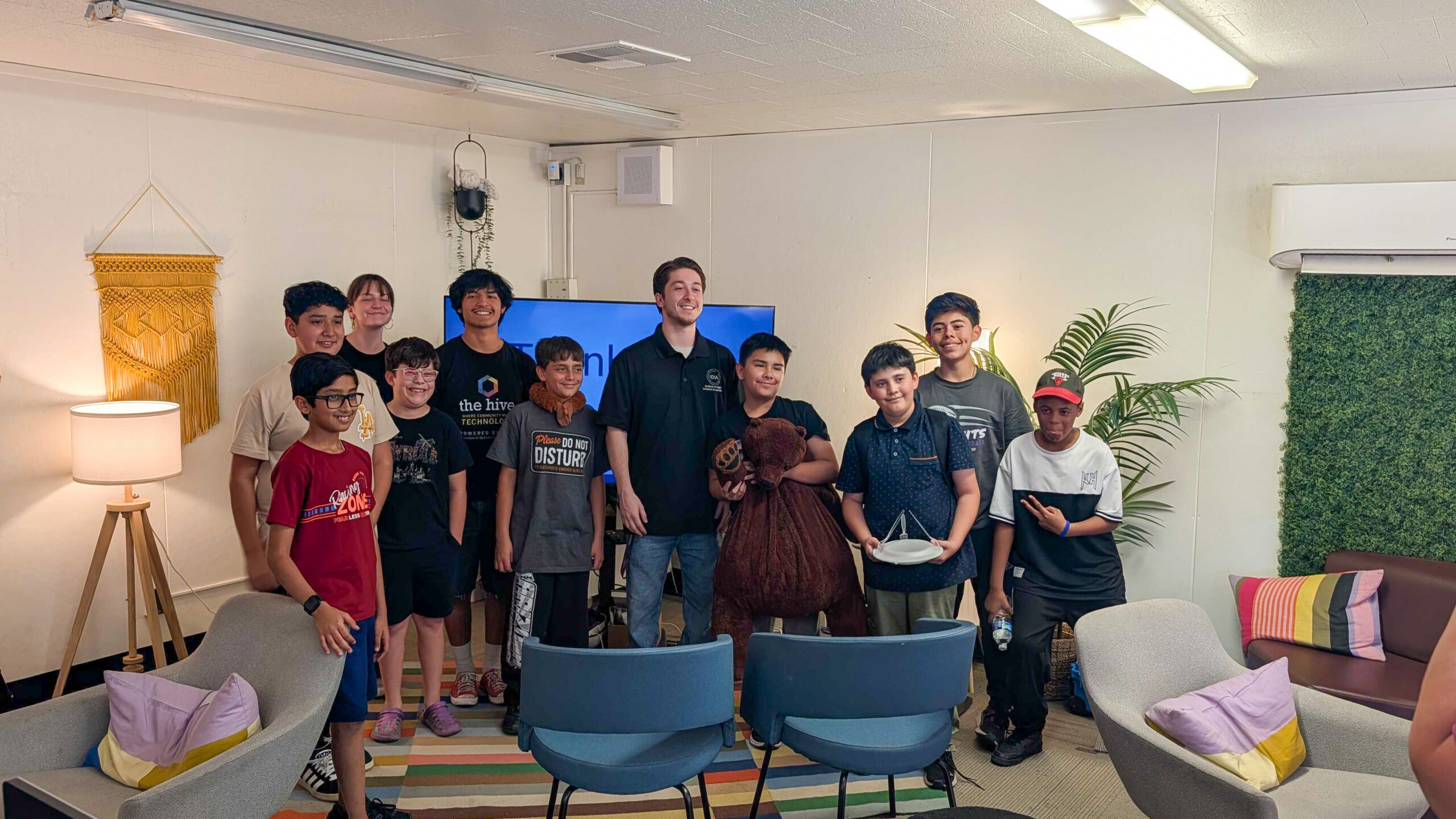
It may have been a record-hot spring break in Arizona, but for dozens of young learners, feeling stuck inside was never on the agenda.
Across the Institute for Digital Inclusion Acceleration’s (IDIA) community Hives, kids ages 10 to 14 spent their school break building, testing, experimenting, and presenting their way through a hands-on camp focused on the future of energy. Over the course of the week, participants explored the power of sunshine, wind, thermal energy, bio materials, and most importantly, their own brains.
Hosted at IDIA Hives across the region — including Sierra Vista, Superior, Chandler, Tempe, and others — the spring break camp gave kids the chance to experience science and technology in ways that felt creative and deeply tangible. The goal was not simply to fill the hours during the week, but to create access to learning, confidence, community, and the kinds of experiences many learners do not always get during time away from school.
As Dr. Annissa Furr, Head of Research and Learning at IDIA, explained, “It really was to just kind of bring them in and immerse them in really cool technology, allow them to learn in ways that they’re probably not able to learn in the classroom, and just have fun doing it.”
From Sunlight to Showcases
Each day introduced a new challenge. On Monday, campers built and customized solar cars, experimenting with variables like panel placement, shade, and design to see how each change affected performance. Some added glitter and color. Others adjusted parts and tested again and again.
While it felt purely like fun and play, the kids were actually building problem solving skills in a memorable way.
“I don’t think they even realized that they were doing the scientific method, but they were,” Furr said.
The discovery continued through the rest of the week, with campers designing wind turbines on Tuesday using cardboard, plastic, and even 3D-printed materials. They learned how to use multimeters to measure how much electricity their creations could generate.
Then, on Wednesday, they made bio-batteries from lemons, potatoes, grapes, and even vegetable scraps, powering light bulbs and clocks from unexpected sources. And on Thursday, the final day of camp, they built solar ovens from simple materials like black paper and foil, then used them to melt s’mores in the spring sun — a fitting Arizona finale.
The Real Power They Discovered
The week wrapped up Thursday evening with one of the most powerful moments, as the students gave presentations in front of parents and caregivers to explain what they built and what they learned. As part of the final showcase, groups were also given different cities and asked to determine which renewable energy source made the most sense for that location based on climate and conditions.
The assignment asked them to think critically, apply their learning, and tell a story in front of an audience.
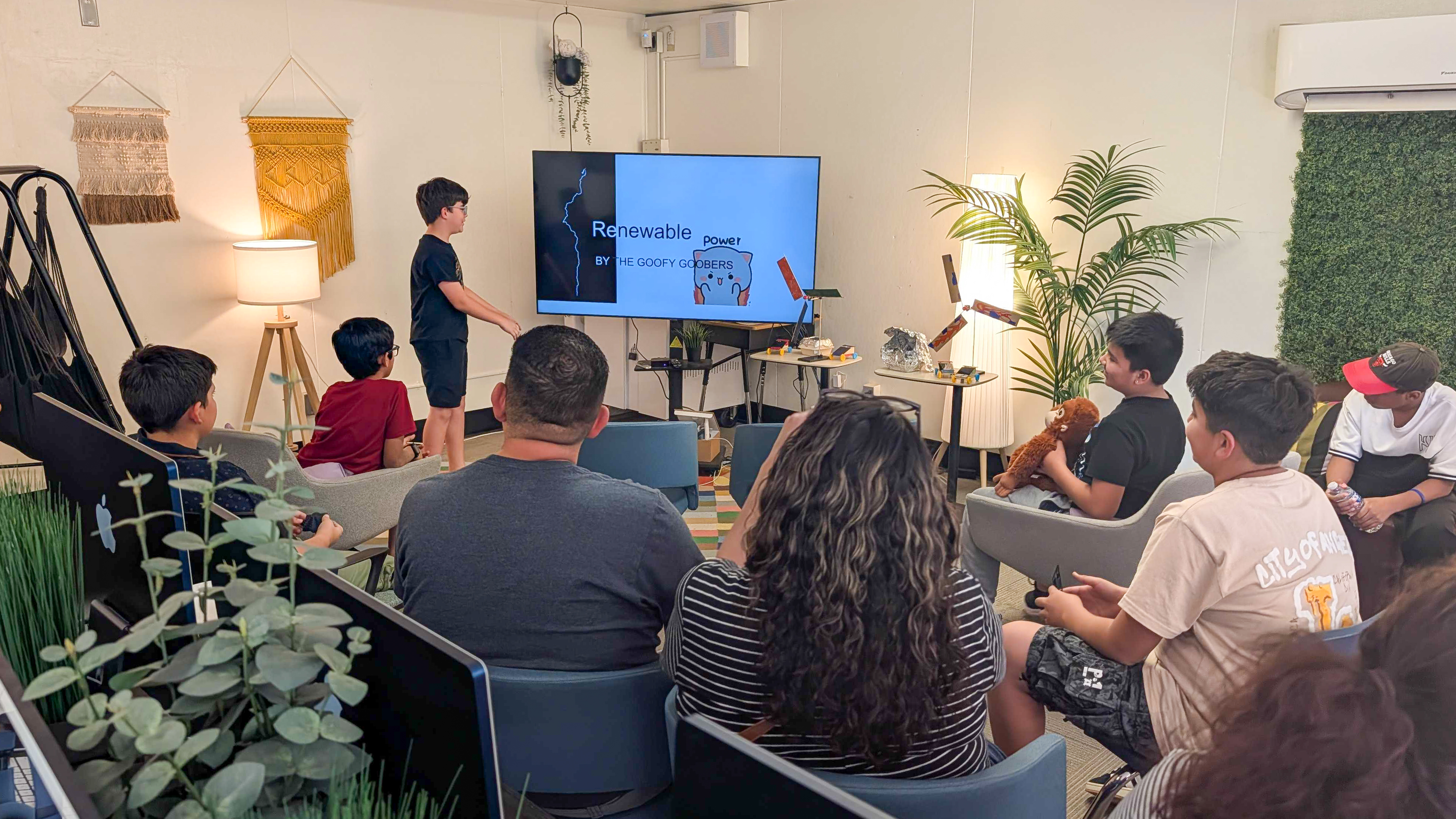
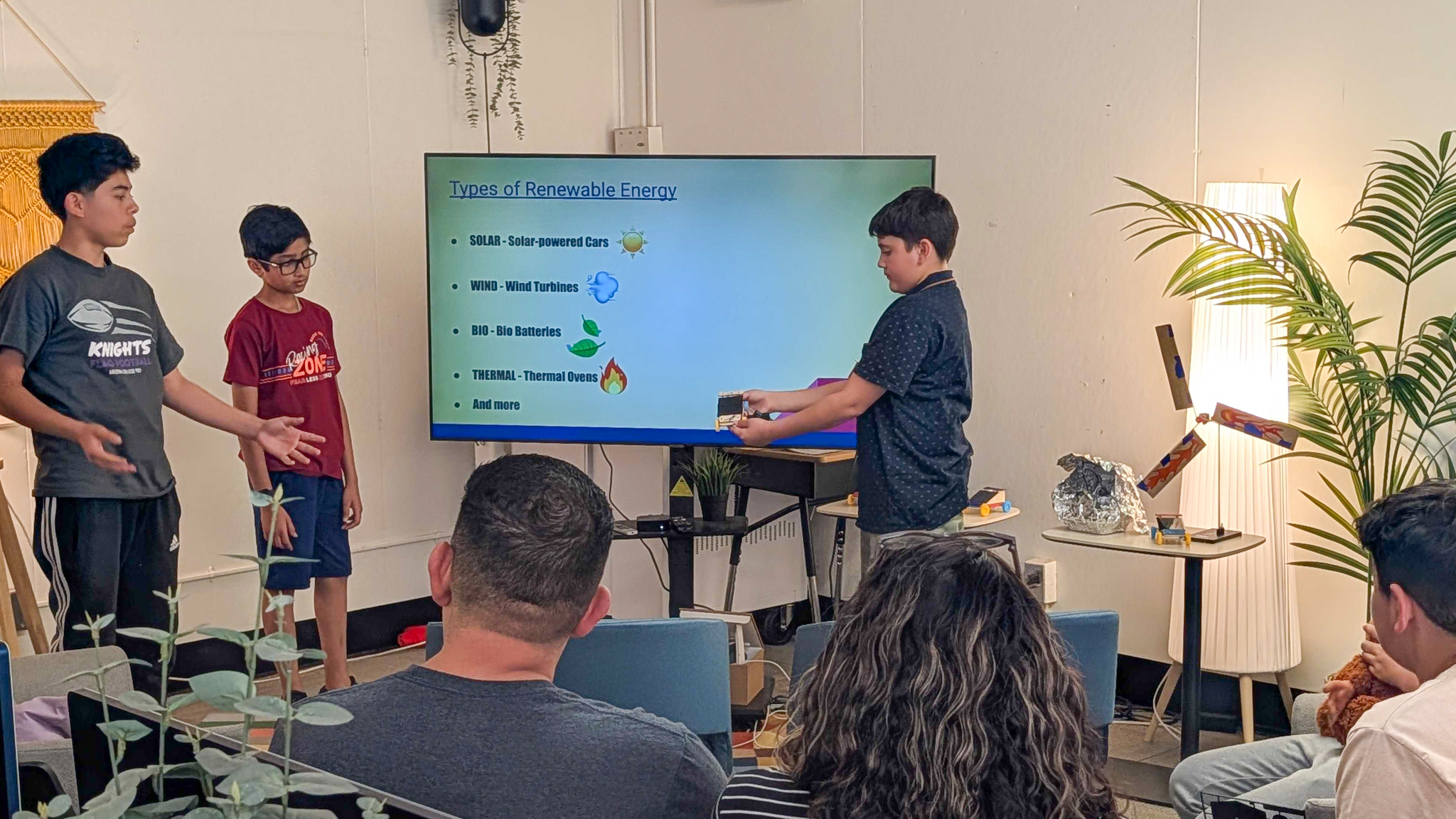
“Having these 10 year olds get up there and present, and have a slide deck behind them — it’s such a great learning experience for them and for them to take the ownership of the project,” said Furr. “And you can see that the parents and the caregivers are just beaming watching their kids, and it’s such a huge transformation to watch.”
Through each renewable energy experiment, the participants had the chance to see themselves as builders, presenters, problem-solvers, and teammates. Although they arrived as strangers on day one, they left as collaborators. It was both a fun spring break memory and a catalyst for new skills and confidence.
“The camp captured IDIA’s purpose and mission in one of the clearest ways possible,” says Dr. Erin Carr-Jordan, President and CEO of IDIA. “We believe technology should spark wonder. This camp gave young people the chance to explore real-world science in incredibly fun, hands-on ways, and to see themselves as innovators, problem-solvers, and future leaders. The skills and confidence they learned are the building blocks that carry them forward, regardless of the path they choose”
That growth was just as visible to families as it was to staff.
“Everything was very polished and professional, and the skill of public speaking is invaluable,” said Candice, a caregiver from Sierra Vista. “We were very impressed with the staff and facility’s offerings.”
For many families, the camp was just one example of the broader confidence, connection, and opportunity the Hives continue to create for young people.
“My kids have been involved in so many activities at The Hive,” said Mrs. Gradeless of Superior. “They go almost daily after school and it’s one of the best things to ever happen to Superior. It’s a huge asset to our children.”
 English
  Español de México